Tesla begins mass-producing humanoids in California
The automaker has shifted a former car assembly line in Fremont to build Optimus robots, aiming for a million units annually.
By Naledi Dlamini ·
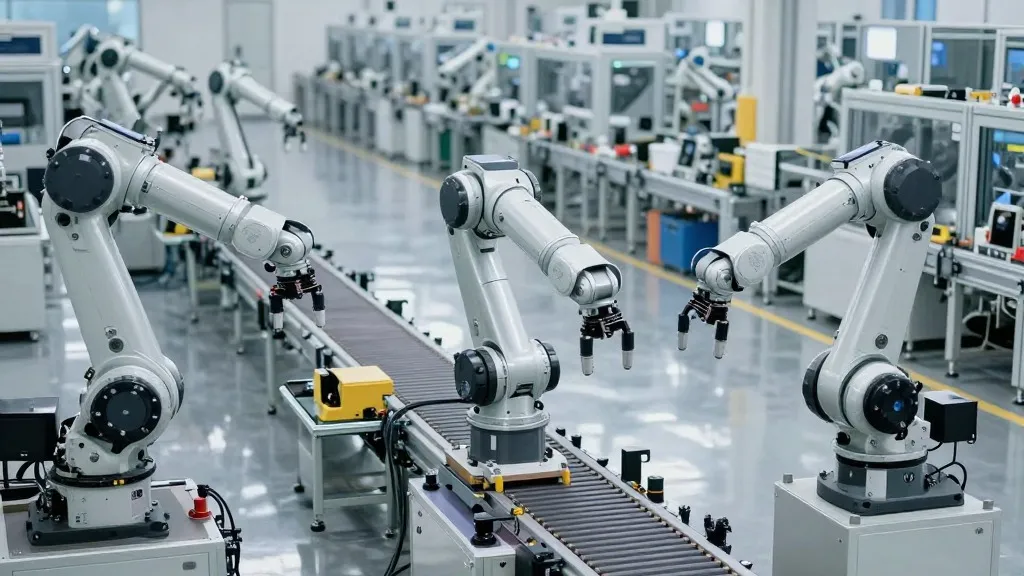
Tesla has officially begun manufacturing its Optimus humanoid robots on a high-volume assembly line within its Fremont factory, marking a major shift in the company’s production strategy. In its third-quarter shareholder letter, the firm confirmed that the units rolling off this specific line are the first to meet production-quality standards. The statement emphasized that the manufacturing process has been validated for commercial use, signaling a move from prototype development to tangible product output.
The facility previously dedicated to building Model S and Model X vehicles was cleared in just 46 days to accommodate the new robot line. This transition, which occurred earlier this spring, was designed with a massive scale in mind, targeting a capacity of one million units per year. During Wednesday’s earnings call, Elon Musk noted that the majority of the necessary equipment is already installed in Fremont. He indicated that production rates are expected to rise significantly, with the line ramping up toward approximately 20,000 robots per week.
Musk characterized the growth trajectory of Optimus as a classic S-curve, though he warned that the initial slope would be shallow. The engineering team is currently focused on refining the robot’s artificial intelligence, electromechanical design, and overall reliability. These improvements are slated for completion by the end of next year. At that point, Tesla plans to begin delivering units to external companies, specifically targeting roles that are dangerous, repetitive, or require around-the-clock operation.
A unique challenge for Tesla is the lack of a large existing fleet to gather training data, unlike its network of millions of cars. To solve this, the company is implementing an Optimus Academy, where between 10,000 and 20,000 robots will practice diverse tasks. Every unit produced in Fremont will contribute to this learning process, feeding data back into the next iteration of the AI model to improve performance across the entire population of robots.
Hardware upgrades are also on the horizon. Tesla intends to integrate its AI5 chip into Optimus next year. Musk stated that a new video demonstrating the robot performing tasks driven by AI rather than preprogrammed motions is expected within one or two months. He contrasted this approach with rival humanoid demonstrations that rely on scripted routines, arguing that such methods would not withstand the complexities of real-world environments.
The supply chain is expanding to support this growth. In September, Tesla certified Tuopu, Joyson, and Sanhua as mass production partners for key components. Meanwhile, construction continues on a much larger Optimus facility at Giga Texas. Recent aerial footage shows the steel frame of that plant nearing completion, with Musk setting a long-term target of 10 million robots annually for that location.
Executives noted that Optimus production costs are aligning with the manufacturing targets set for the Cybercab, indicating the robot is being engineered for volume efficiency from the outset. The most difficult engineering component remains the robot’s hands, a focus area highlighted by Musk at the recent X Takeover event. Current efforts are heavily concentrated on solving the dexterity challenges associated with these critical parts.
Source: Teslarati